The industrial challenge behind modern fertilizer production
Fertilizer production is one of the largest and most established branches of the chemical industry, and one of the most demanding to operate. Turning basic feedstocks into plant nutrients requires plants that run continuously, at high capacity, with tightly controlled energy consumption and product quality.
Those operating requirements are becoming harder to meet as food demand rises, energy costs fluctuate, and emission limits tighten.
Discover how Casale designs efficient, reliable plants
Food security starts with industrial production
Agriculture cannot produce, at the necessary scale, the nutrients that high yields require, and nitrogen is the clearest example. A good amount of the world's food is grown using synthetic nitrogen fertilizers, and their production begins with industrial ammonia synthesis.
The capacity, efficiency and reliability of ammonia and downstream fertilizer plants therefore set the conditions under which food is produced, which is why food security depends directly on industrial capacity.
Producing more with fewer resources
Producers have to raise output while working under tightening constraints. Energy costs and availability, CO₂ emissions, plant reliability, and competitiveness bear on the same installation at once. Efficiency and dependability are designed into a plant, and together with energy use they set its Capex, its Opex, and the product quality it holds over decades of operation.
Understanding the fertilizer value chain
One manufacturing ecosystem, multiple production pathways
Fertilizer production is organized as a value chain: feedstocks become intermediates, intermediates become finished products, and each stage passes to the next through a defined process. Several routes run through this manufacturing system in parallel (e.g., nitrogen, phosphate, compounds) sharing feedstocks, utilities and know-how. Seen as a whole, the chain shows where cost, efficiency and product quality are actually set.
Ammonia as the foundation of the nitrogen value chain
The nitrogen side of that chain rests on one molecule: ammonia. This is the platform from which nitrogen fertilizers are built, the stage at which atmospheric nitrogen is fixed into a form crops can use. Urea, ammonium nitrate and other nitrates all derive from it, so the performance of ammonia synthesis sets the terms for everything downstream of it.
From individual products to a connected production network
From that base, the chain branches into separate routes.
- Urea, nitric acid and nitrates are nitrogen products derived from ammonia.
- Phosphates follow an independent pathway.
- NPK and compound fertilizers combine nitrogen, phosphorus, and potassium together into finished grades.
The phosphate and potassium routes do not originate from ammonia, yet they belong to the same production network, and much of the engineering value lies in how these routes are connected on a single site.
Building the nitrogen fertilizer value chain
Ammonia: where nitrogen fertilizer production begins
Ammonia synthesis is the starting point of nitrogen fertilizer production. The reaction that fixes nitrogen and hydrogen into ammonia — industrialized as the Haber-Bosch process more than a century ago — remains the entry to the entire nitrogen chain.
It is also where Casale began: the company was founded in 1921 on one of the first industrial high-pressure ammonia synthesis processes, and has designed, revamped and optimized ammonia synthesis loops ever since.
The same molecule is now central to decarbonization: ammonia made from renewable energy is the subject of Casale's lower-carbon technologies.
Urea: adding value through carbon utilization
The first major step downstream of ammonia is urea, produced by reacting ammonia with carbon dioxide. In integrated ammonia-urea complexes, the CO₂ feed is typically the stream co-produced by the ammonia unit, so that a by-product of ammonia synthesis is recovered as a reactant for urea.
Here, carbon utilization means process integration — the ammonia plant's CO₂ is reused on site — rather than the capture of external CO₂ discussed elsewhere in this series. It is one reason ammonia and urea units are usually engineered together.
Nitric acid and nitrates: expanding the nitrogen portfolio
A second route from ammonia leads to nitric acid, and from there to a family of nitrate products. Ammonia is oxidized to nitric acid, which is then used to produce ammonium nitrate, calcium ammonium nitrate (CAN) and other nitrate fertilizers. Each is a distinct process with its own configuration, though all draw on the same ammonia base, so they remain part of one nitrogen value chain rather than a set of separate units.
Beyond nitrogen: completing the fertilizer portfolio
Phosphates: a separate industrial pathway
Crops need more than nitrogen, and the portfolio extends accordingly. The phosphorus comes from phosphate rock rather than from ammonia, on a separate production route, though finished products such as DAP and MAP then combine it with ammonia. Phosphate manufacturing is its own set of processes, feeding finished and compound grades.
NPK and compound fertilizers
NPK and compound fertilizers bring the three primary nutrients (i.e., nitrogen, phosphorus and potassium) into single finished grades. Nitrogen and phosphorus enter from their respective routes, while potassium is added as a mined nutrient input. NPK is not one standardized process but a family of configurations, selected according to raw materials, target grade and product specification. What matters in engineering terms is combining these streams reliably and at consistent quality.
From intermediate products to finished fertilizers
The final stage converts intermediates into finished fertilizers. Granulation and prilling give the product its physical form, handling characteristics and storage stability: the properties it needs to reach the field intact and perform predictably. Finishing is one stage of the chain, and it is where much of the product's handling quality is set. Together, phosphates, compound fertilizers and finishing extend the system beyond the nitrogen chain.
Engineering an integrated fertilizer complex
A fertilizer complex performs better when its units are designed to operate together, and that performance must hold across an operating life measured in decades.
Why process integration matters
The difference between supplying a unit and engineering a complex is plant-wide integration. Ammonia, urea, nitric acid and nitrate units are interdependent: the by-products, heat and utilities of one are inputs to another. Designed in isolation, they waste heat and duplicate utilities; designed together, they form a balanced plant.
Designing the entire value chain
Integration is concrete engineering. Heat recovered from one process serves another; the CO₂ from ammonia feeds urea; steam, power and utilities are balanced across the site; and the whole is designed for operational continuity, including the upgrades and revamping that keep an asset competitive over its lifetime. That continuity links fertilizer production to the wider question of how industrial plants are modernized rather than replaced.
Engineering in practice: an integrated ammonia-urea complex
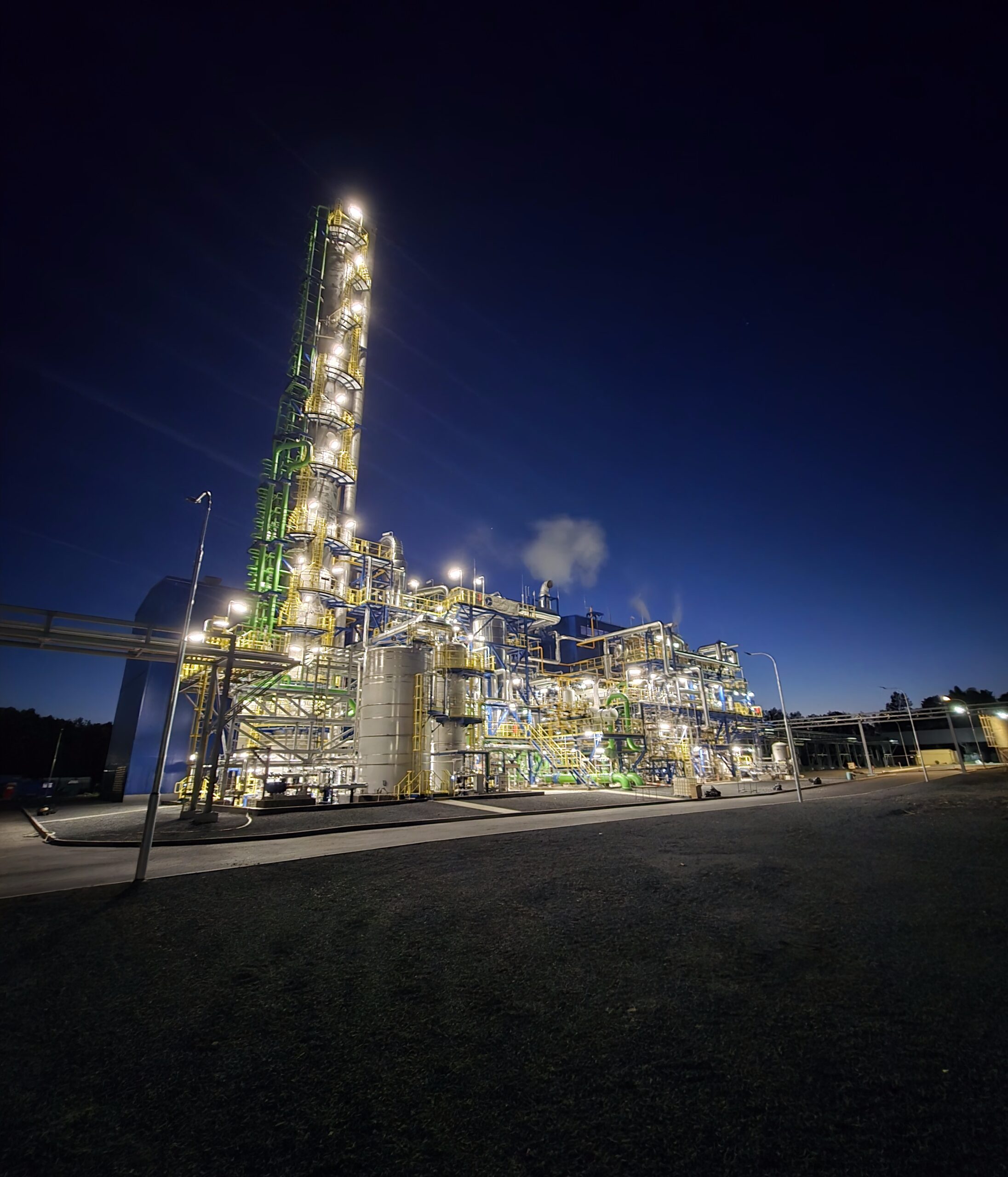
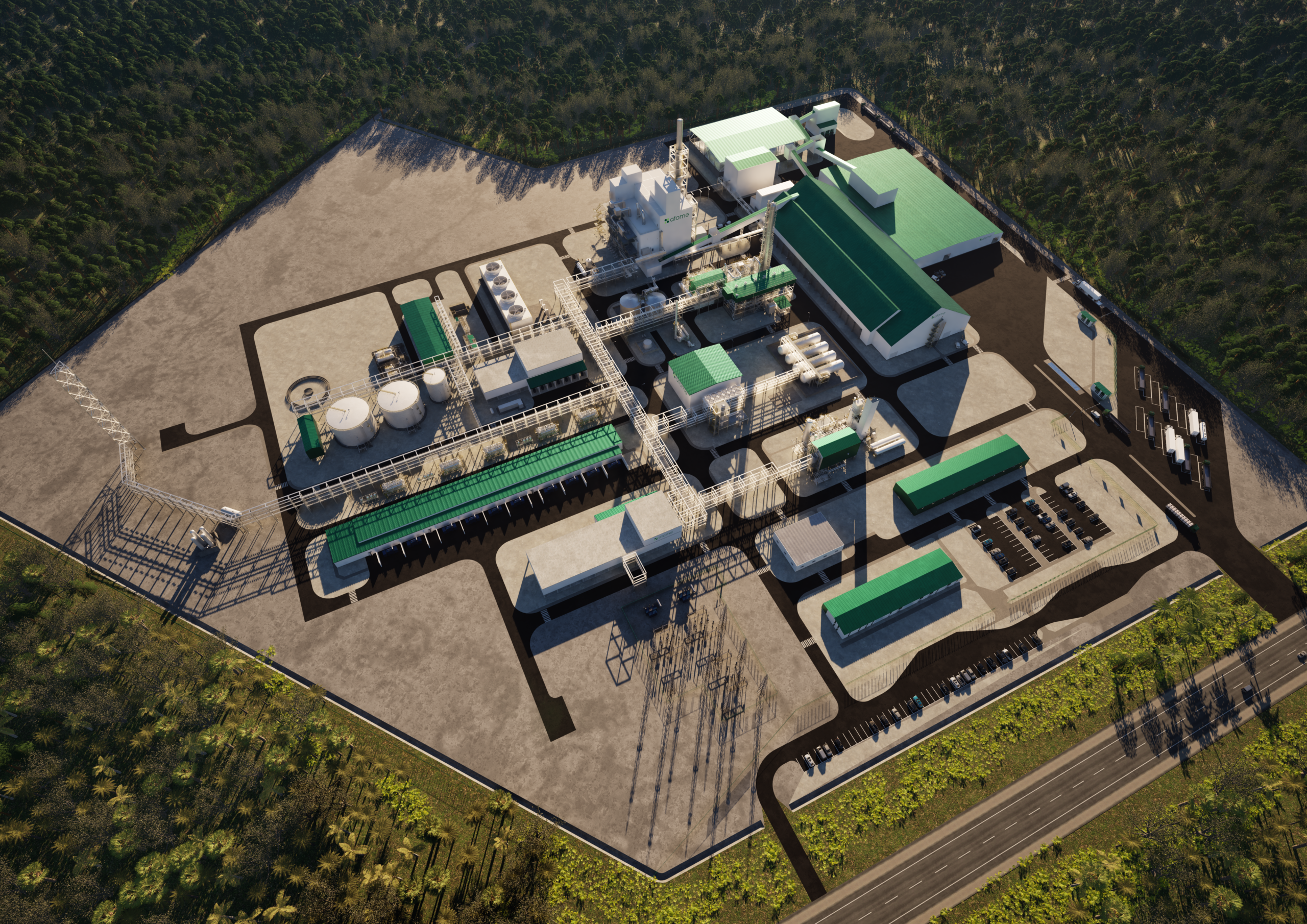
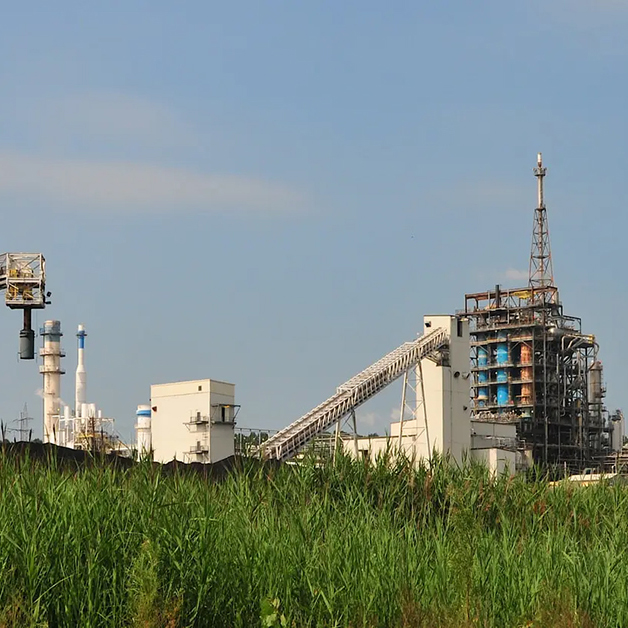
At the FE Karakulkimyo complex in Karakul, Uzbekistan, ammonia and urea production — roughly 1,500 MTD of ammonia and 1,800 MTD of urea — were engineered as a single, integrated complex rather than as separate units, with the CO₂ and heat of the ammonia plant recovered in urea production. Casale's scope covered licensing, front-end engineering and the supply of proprietary equipment. It is a concrete case of the ammonia-to-urea integration described above.
DISCOVER MORE
Fertilizer production in the low-carbon transition
Decarbonizing nitrogen production
In the nitrogen chain, the bulk of the CO₂ arises in ammonia production, so decarbonization begins there. Lowering the carbon intensity of ammonia — through carbon capture or renewable-powered production — supports lower-carbon nitrogen fertilizers downstream, while the finished products and their use remain largely unchanged.
Green ammonia as an enabler
Green ammonia is the entry point to this shift: renewable hydrogen replaces fossil-derived hydrogen at the base of the chain, so the nitrogen fertilizers made from it carry less carbon. The engineering of green ammonia is covered in Casale's work on low-carbon molecules; here it matters as the link that connects fertilizer production to the energy transition.
Towards lower-carbon fertilizer value chains
Together, these developments point towards fertilizer value chains in which conventional and renewable production coexist, and the same downstream units serve both. Casale's FLEXIGREEN® technologies address the green side of that chain, linking the fertilizer portfolio to the broader low-carbon transition.
Syngas: the engineering foundation behind multiple low-carbon pathways
Underneath all three molecules sits one competence: synthesis gas. Whether the hydrogen and carbon monoxide come from natural gas with carbon capture, from biomass or waste gasification, or are partly replaced by electrolytic hydrogen, the downstream synthesis of ammonia, hydrogen, and methanol draws on the same core disciplines (i.e., reforming, gas conditioning, synthesis-loop design and heat and process integration).
This is why the low-carbon molecules form one problem rather than three, and why syngas is the decisive competence in the transition rather than an incidental one. Command of synthesis gas is what connects conventional production to its lower-carbon successors: it lets a single technology base extend from conventional to blue to green without starting over on each, and it is the reason experience accumulated on conventional plants transfers directly to the low-carbon versions. The newer configurations are extensions of this foundation, not departures from it.
Explore our syngas solutions
Engineering the fertilizer value chain with Casale
A complete fertilizer technology portfolio
No single technology can answer all demands. What does is breadth across the whole chain (i.e., ammonia, urea, nitric acid, nitrates, phosphates, NPK and finishing) with the experience to make those processes work as one. Casale's portfolio covers that range, and it rests on more than a century of work that began with ammonia synthesis in 1921. That heritage matters as reliability: technology proven across a large installed base of more than 80 ammonia synthesis loops (some up to 3,100 MTD) and over 120 nitric acid and ammonium nitrate references, refined over decades of operation.
Integrated Engineering Beyond Individual Technologies
As a technology licensor, Casale supplies the proprietary processes along the chain; as a process integration specialist, it engineers how those processes connect. What it offers is plant-wide engineering: the ability to design, integrate and modernize a fertilizer complex as one system, from feedstock through downstream conversion to finished product.
Supporting producers across the entire value chain
For a producer, that means the nitrogen chain, its phosphate and compound extensions, and their lower-carbon evolution can be assessed and delivered by one partner, on one engineering foundation. Every project starts the same way: with a view of the whole value chain, and of how each process fits within it.
Explore Casale's fertilizer technologies
Frequently asked questions
The fertilizer value chain is the connected set of industrial processes that turn raw feedstocks into finished fertilizers: from ammonia synthesis to urea, nitric acid and nitrates, alongside phosphate and NPK production, and through to finishing by granulation or prilling. It is best understood as a single production system rather than a group of separate plants.
Ammonia is the molecule in which atmospheric nitrogen is fixed into a usable form. Nitrogen fertilizers downstream (i.e., urea, ammonium nitrate, CAN and other nitrates) derive from it, which makes ammonia synthesis the entry point and a precondition of the whole nitrogen chain.
Urea is produced by reacting ammonia with carbon dioxide; in integrated complexes the CO₂ is typically recovered from the ammonia unit, so the two are engineered together. Ammonium nitrate follows a different route: ammonia is oxidized to nitric acid, which is then converted into ammonium nitrate and related nitrate products.
Nitrogen fertilizers supply nitrogen alone, derived from the ammonia chain. NPK and compound fertilizers combine nitrogen, phosphorus and potassium in a single finished grade, drawing nitrogen and phosphorus from their production routes and adding potassium as a mined nutrient input.
Nitrogen fertilizers supply nitrogen alone, derived from the ammonia chain. NPK and compound fertilizers combine nitrogen, phosphorus and potassium in a single finished grade, drawing nitrogen and phosphorus from their production routes and adding potassium as a mined nutrient input.
Because the units in a fertilizer complex are interdependent: the CO₂, heat and utilities of one process can feed another. Designing them as one system, rather than unit by unit, is what improves efficiency, reliability and competitiveness across the plant's operating life.
In the nitrogen chain, most emissions arise in ammonia production, so decarbonization starts there, through carbon capture or renewable-powered green ammonia. Lowering the carbon intensity of ammonia supports lower-carbon nitrogen fertilizers downstream.
Fertilizer technologies determine how much can be produced, and at what cost, efficiency and reliability. Because a large share of the world's food depends on synthetic nitrogen, the capacity and performance of fertilizer plants are directly linked to the ability to feed a growing population.